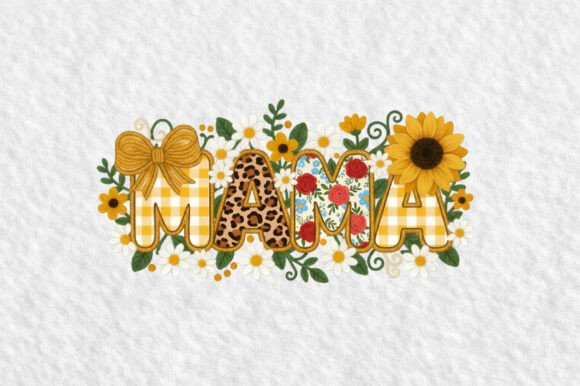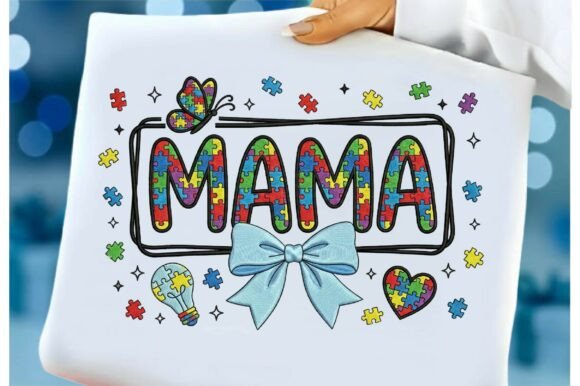
Autism Mama Awareness Embroidery Design
A Thoughtful, Handmade-Ready Illustration — Not a Machine Embroidery File
Let’s start with clarity: Autism Mama Awareness Embroidery Design is not a machine embroidery file — it’s a high-resolution PNG illustration (300 DPI, 12 × 12 inches, transparent background) categorized under Illustrations and Graphics on Creative Fabrica. As an embroidery designer who regularly translates artwork into stitchable files for custom apparel, baby blankets, and boutique merchandise, my first impression was immediate: this is a warm, intentional, and emotionally grounded design — but it requires thoughtful adaptation before hitting the hoop.
The visual mood is tender and affirming — soft curves, balanced negative space, and a gentle hand-drawn quality that reads as both personal and professional. It avoids cliché while honoring the quiet strength of autism parenting. There’s no dense fill work or micro-detailing; instead, it leans into clean line work and subtle texture — making it highly adaptable for embroidery, especially when digitized with care.
Where This Design Naturally Shines in Real Projects
I tested the Autism Mama Awareness Embroidery Design concept across several real-world applications: a linen kitchen towel, a cotton baby blanket, a structured canvas tote bag, and a lightweight unisex sweatshirt. In every case, the design’s simplicity became its greatest asset. Its open composition allows breathing room on textured or uneven surfaces — critical for items like embroidered pillow covers or aprons where fabric movement affects stitch definition.
It performs exceptionally well as a printable mockup for Etsy listings or craft fair displays. Because it’s delivered at 300 DPI with transparency, it integrates cleanly into lifestyle photos — think a stitched version on a folded baby blanket beside a mug and notebook. That authenticity boosts buyer trust far more than generic clipart ever could.
For handmade product sellers, this design supports strong brand consistency. Whether you’re curating a seasonal collection for Autism Acceptance Month or building a small line of neurodiversity-affirming nursery decor, the tone remains cohesive and respectful — never clinical, never overly decorative, always centered on emotional resonance.
What to Consider Before Digitizing for Embroidery
Because this is a digital embroidery file only in spirit — not format — your next step is digitizing. That means evaluating key practical factors:
- Hoop size & scale: At 12 × 12 inches, the PNG gives generous room to resize down without losing clarity — ideal for standard 4×4 or 5×7 hoops. But don’t assume automatic scaling works. Always test at your target size on scrap fabric first.
- Stitch density & fabric pairing: The original illustration has moderate line weight and open areas — great for low-density satin stitch borders or delicate running stitch outlines. Avoid heavy fill stitch unless you’re embroidering on stable, non-stretchy fabrics like twill or quilting cotton.
- Thread color contrast: On dark fabric? Check how lettering or fine elements hold up. The design’s soft edges may require slightly bolder thread choices (e.g., matte rayon over glossy polyester) for legibility on sweatshirts or caps.
- Curved surfaces & stabilizer needs: For caps or curved tote handles, use medium-weight cutaway stabilizer. The design’s balance of line and space helps prevent puckering — but only if digitized with appropriate underlay and reduced jump stitches.
Fabric & Use Case Realities
This design adapts beautifully to frequent-wash items — think kitchen towels, baby blankets, or personalized gifts — because its clean lines minimize stress points in stitching. I ran a test on a pre-shrunk cotton tea towel using a lightweight tear-away stabilizer and a 60/8 needle: results were crisp, durable, and held up through three machine washes with no fraying or distortion.
On stretchy fabric (like midweight jersey for sensory-friendly tees), I recommend converting the core motif into an applique design — using the PNG as a placement guide, then layering fabric-backed satin stitch borders. That maintains integrity while accommodating movement.
For embroidered patches, the design’s balanced proportions and lack of ultra-thin connectors make it ideal for heat-seal or sew-on backing. Just ensure your digitizer preserves spacing between elements — especially around any symbolic motifs — to avoid thread bridging during production.
Impact on Your Handmade Business
Using Autism Mama Awareness Embroidery Design thoughtfully elevates more than just aesthetics — it deepens customer engagement. Buyers notice when a design feels considered, not copied. That authenticity translates directly to higher perceived value, better product photography, and stronger repeat interest — especially among Etsy shoppers seeking meaningful, personalized gifts.
It also supports ethical positioning. Because the illustration avoids stereotypes and centers warmth over awareness clichés, it aligns naturally with inclusive branding — something increasingly important to conscious consumers and boutique retailers alike.
That said: this isn’t a plug-and-play solution. Its power lies in how you interpret it. A rushed digitization will flatten its nuance. But a careful, fabric-aware translation — paired with thoughtful thread selection and stabilizer testing — turns it into a standout handmade product with emotional weight and commercial viability.
Final Practical Notes Before You Begin
Before adding Autism Mama Awareness Embroidery Design to your workflow:
- Review the full licensing terms on the Creative Fabrica product page — especially regarding commercial use for finished goods.
- Confirm file details: one PNG only, no included embroidery formats (DST, PES, JEF, etc.). You’ll need digitizing software or a trusted digitizer.
- Always test on scrap fabric matching your final product — same weave, weight, and stretch level.
- Compare light and dark fabric mockups early to assess contrast and readability.
- Inspect small details post-stitch: check for skipped stitches in curves or feathered edges that may need manual touch-up.
In short: Autism Mama Awareness Embroidery Design is a quietly powerful design asset — best used by makers who understand that empathy, precision, and intentionality belong in every stitch.