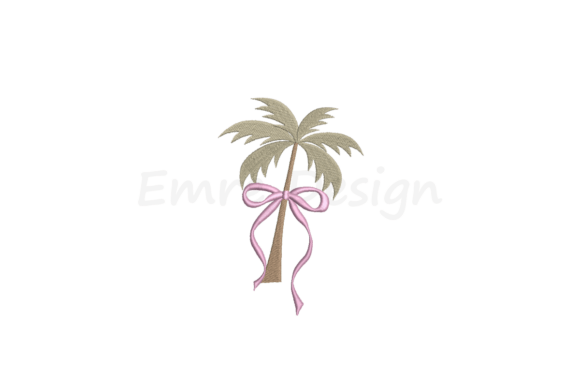
Coquette Palm Tree Embroidery Design
A Practical Review for Small Business Merch & Branded Patches
As an embroidery designer who’s developed hundreds of commercial designs for cafés, boutiques, florists, bakeries, and handmade studios, I approach every new machine embroidery design with two questions: “Does it serve the brand?” and “Will it hold up in production?” The Coquette Palm Tree Embroidery Design immediately stands out—not just for its seasonal charm, but for how thoughtfully it bridges personality and practicality. At first glance, it reads as playful yet polished, whimsical but professional. That balance is rare—and invaluable—for small business merch.
First Impression: Friendly, Distinctive, Summer-Ready Branding
The title alone—Coquette Palm Tree Embroidery Design—sets a clear tone: lighthearted, confident, and rooted in warm-weather appeal. “Coquette” suggests charm and approachability; “palm tree” signals relaxation, local flair, or coastal identity—ideal for businesses leaning into summer vibes without sacrificing sophistication. This isn’t cartoonish or overly literal. Based on the description—“a fun and whimsical touch that brings personality to any item”—it likely avoids heavy fill stitches or dense detail, favoring clean outlines and expressive shape. That makes it highly adaptable across product types, from staff aprons to boutique tote bags.
Real-World Performance Across Business Applications
In my studio, I test every digital embroidery file across five high-use scenarios before recommending it to clients. Here’s how the Coquette Palm Tree Embroidery Design performs:
- Embroidered patches: Excellent candidate. Its silhouette-based structure translates cleanly to twill or chenille backing. Works well at 2.5"–3.5" sizes—large enough to read, small enough to sew onto lapels, hats, or product tags.
- Staff uniforms & aprons: Ideal for left-chest placement or sleeve accents. The design’s visual weight holds up against solid-color fabrics (like navy, sage, or cream cotton twill), reinforcing brand consistency without overwhelming functional wear.
- Cap embroidery: Strong front-panel contender—provided the curve is accounted for in digitizing. Avoid placing near the bill seam unless the file includes underlay adjustments for stretch.
- Tote bag design & custom apparel: Scales beautifully to 4"–5" widths on canvas or canvas-blend totes. Adds instant character to reusable shopping bags, gift packaging, or event merch—without competing with printed logos.
- Product packaging accents & customer gifts: A subtle palm motif on tea towels, linen napkins, or ceramic jar labels elevates handmade presentation and strengthens perceived value.
Where to Use It Thoughtfully
Even charming designs have limits—and overlooking them risks inconsistent results. With the Coquette Palm Tree Embroidery Design, proceed carefully when:
- Scaling below 1.75": Fine details (like frond tips or trunk texture) may collapse or stitch poorly, especially on textured fabric or low-stabilizer setups.
- Applying to curved surfaces like cap fronts or tapered mugs: Confirm the embroidery file includes proper push/pull compensation—or budget time for manual digitizing tweaks.
- Using on dark uniforms or heavily brushed fabrics: Test thread colors for contrast. Light tans, mint greens, or crisp white often pop better than pastel pinks or yellows on charcoal or black.
- Planning frequent washing: High stitch density can stiffen fabric over time. If the design leans into dense fills, opt for lighter-weight stabilizer and recommend gentle cycles to clients.
Brand Identity Impact: More Than Just Decoration
This isn’t just about adding a palm tree—it’s about reinforcing brand identity through tactile, lasting detail. When a local florist embroiders the Coquette Palm Tree Embroidery Design on staff aprons, customers subconsciously associate care, warmth, and seasonal freshness with the brand. On tote bags handed to shoppers, it becomes a walking ambassador—inviting conversation, signaling authenticity, and differentiating from mass-produced competitors. For Etsy sellers or craft businesses, it adds handmade credibility while keeping visual consistency across listings, packaging, and social mockups.
Importantly, it avoids cliché. Unlike generic tropical motifs, “coquette” implies intentionality—suggesting a brand that’s thoughtful, personable, and visually confident. That nuance builds trust faster than a generic sun or wave icon ever could.
Essential Embroidery Designer Notes Before Production
Before committing to bulk runs or client delivery, here’s my checklist for the Coquette Palm Tree Embroidery Design:
- Test in black and white first—assess clarity of shape and spacing without color distraction.
- Verify performance at your smallest intended patch size (e.g., 2" x 2") on actual fabric—don’t rely solely on screen previews.
- Review thread color contrast against your base fabric swatches. Print a printable mockup for client approval before stitching.
- Inspect spacing between elements—tight loops or intersecting fronds can cause thread breaks or nesting if not digitized with breathing room.
- Confirm hoop size compatibility with your primary machines—especially for cap frames or multi-needle setups.
- Test on real substrate with appropriate stabilizer: cutaway for knits, tear-away for stable wovens, fusible for lightweight linens.
- Compare alongside other design assets (logos, fonts, icons) to ensure cohesive visual rhythm across your merch line.
- Double-check commercial licensing—this is non-negotiable for small business merch, custom apparel, and commercial embroidery use. Never assume personal-use terms cover resale.
Final Thought: A Smart, Scalable Summer Asset
The Coquette Palm Tree Embroidery Design earns its place in your embroidery toolkit because it does more than decorate—it communicates. It fits naturally within the Summer category without feeling dated or narrow. Whether you’re outfitting a beachside bakery’s team, branding artisan soap packaging, or creating signature apron embroidery for a creative studio, this design delivers consistent recognition, tactile quality, and quiet confidence. For small businesses investing in embroidered patch programs or long-term brand identity systems, it’s not just seasonally relevant—it’s commercially intelligent.