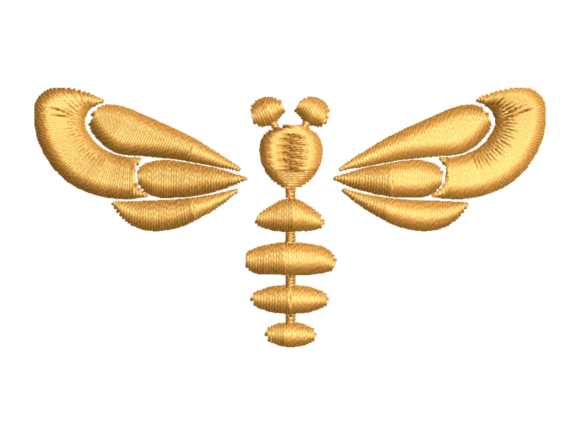
Minimal Bee Embroidery Design
First Impression: Quiet Charm, Big Appeal
As an embroidery designer who’s prepped over 200 craft fair booths—and watched customers pause, point, and reach for items in under three seconds—I can tell you this: Minimal Bee Embroidery Design lands exactly where today’s handmade market wants to be. It’s not loud or cartoonish. It’s not overly sweet or cutesy. It reads as modern minimal, with gentle organic lines and intentional negative space—evoking quiet confidence, nature-aware craftsmanship, and understated elegance. That makes it instantly compatible with farmhouse kitchens, boutique apparel, slow-living gifting, and curated Etsy shops. Customers don’t just see a bee—they see intention, care, and design intelligence.
Where It Shines: Craft Fair & Handmade Product Pairings
This isn’t a one-size-fits-all machine embroidery design—it’s a strategic asset. Here’s how Minimal Bee Embroidery Design performs across your most profitable craft fair products:
- Tote bag design: Perfect as a subtle side-embroidered accent (3–4” wide) on natural canvas or linen-blend totes. It reads cleanly from 6 feet away without overwhelming the bag’s utility.
- Apron embroidery: Ideal above the pocket or centered on the bib. Its clean silhouette complements both modern chef aprons and vintage-style cotton bibs—no visual competition with straps or pockets.
- Tea towel embroidery: Works beautifully in the lower corner or centered near the hem. Because it’s minimal, it doesn’t fight with textured terry or waffle weave fabric texture—and won’t get lost on busy prints.
- Embroidered patch: A standout when heat-applied or sewn onto denim jackets, canvas pouches, or kids’ backpacks. Its simplicity ensures crisp edge definition even at 2.5” scale.
- Caps & curved surfaces: Keep it small (≤2.75”) and place it front-and-center on structured cotton caps. Avoid deep curve zones—the clean outline holds up better than dense fill areas on rounded fabric.
- Pillow covers & small pouches: At 3–3.5”, it becomes a refined focal point—not too dominant, not too shy. Especially effective on oat, sage, or charcoal linen.
What Makes It Sell—Beyond the Stitch
Minimal Bee Embroidery Design earns its spot in your booth because it supports your brand story—not distracts from it. It feels handmade but precise, playful but polished. Customers associate it with quality small shop product values: sustainability, attention to detail, and thoughtful curation. On Etsy listings, it photographs exceptionally well—even on phone screens—thanks to high-contrast potential and uncluttered form. And yes, it’s highly repeatable for batch production: consistent spacing, predictable stitch density, and no nested lettering or micro-details that demand constant rethreading or tension tweaks.
Careful-Use Notes Every Embroidery Designer Should Know
Even minimal designs have limits. Before embroidering 50 tea towels or prepping 30 tote bags, test these variables:
- Dense stitch areas: While overall light, check if the bee’s wing veins or body contour use tight satin stitches—these may pucker on thin cotton or shift on stretchy blends.
- Small details: If the antennae or wing outlines drop below 0.8mm width, they may vanish on dark fabric or textured towels. Confirm visibility with your thread colors before bulk runs.
- Fabric texture matters: Waffle-weave tea towels and heavy canvas absorb detail differently than smooth linen. Always test on your *actual* production fabric—not just scrap muslin.
- Dark fabric contrast: This design relies on clarity, not coverage. Use tonal ecru or pale gold thread on navy or charcoal—avoid black-on-black unless the file includes underlay or fill adjustments.
- Size scaling: It loses impact below 2”, especially in crowded booth lighting. Stick to 2.5–4” for maximum recognition and tactile appeal.
Design Assets That Build Your Business
As a digital embroidery file, Minimal Bee Embroidery Design is more than decoration—it’s versatile design infrastructure. Use it across your ecosystem: as a cohesive element in printable mockups for Etsy listings; as a signature accent on packaging tags or thank-you cards; as part of a seasonal collection (pair with minimalist floral or honeycomb motifs). Its Animal category positioning opens cross-selling paths—think “Bee + Botanical” gift sets—but never forces thematic rigidity. It’s flexible enough for spring markets, summer festivals, and year-round boutique shelves.
Pro Tips From the Hoop: What I Actually Do Before Booth Day
Before committing to any machine embroidery design—including Minimal Bee Embroidery Design—I follow this non-negotiable checklist:
- Run a test on scrap fabric *identical* to my production material—same weight, finish, and dye lot.
- Verify thread contrast by stitching on both light and dark swatches. Don’t assume white thread reads well on ivory linen.
- Review spacing between elements—if it’s a single-bee layout, confirm there’s no unintended crowding near edges or seams.
- Check hoop size compatibility—some minimalist files are optimized for 4x4 hoops, others need 5x7. Confirm before digitizing or resizing.
- Inspect stitch density—especially inside wing shapes. Overly dense fills cause stiffness and thread breakage on lightweight fabrics.
- Choose stabilizer intentionally: tear-away for stable wovens, cut-away for knits or stretchy pouch fabrics.
- Create at least one real finished product mockup—not just a digital preview—to assess drape, texture interaction, and booth-readiness.
- Compare how it looks on multiple fabric colors—oat, slate, olive, cream—then select your top 2–3 for consistency.
- Confirm commercial licensing terms *before* selling finished products. Since this is a digital embroidery file delivered via ZIP or RAR, licensing details must be verified with the original creator.
Final Thought: Why Minimal Bee Embroidery Design Fits Your Booth—And Your Brand
In a sea of bold fonts, glitter motifs, and maximalist animals, Minimal Bee Embroidery Design stands out by stepping back. It invites closer looking. It rewards patience. It signals that your handmade product is designed—not just decorated. For craft fair sellers, Etsy sellers, and boutique makers, that quiet distinction converts browsers into buyers, and buyers into repeat customers. It’s not just another embroidery file. It’s a considered, confident, commercially smart choice—for your table, your listings, and your long-term creative business.