Cartoon Butterfly Embroidery Design
A Playful, Polished First Impression—Right Out of the Hoop
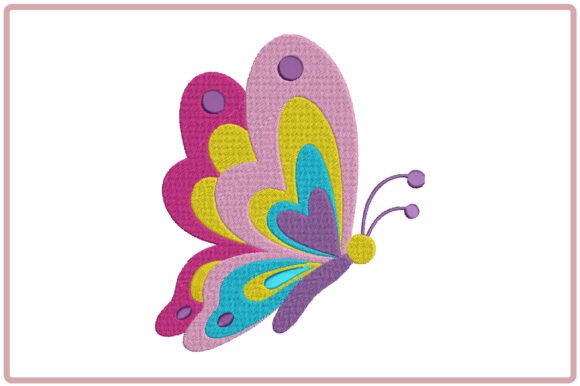
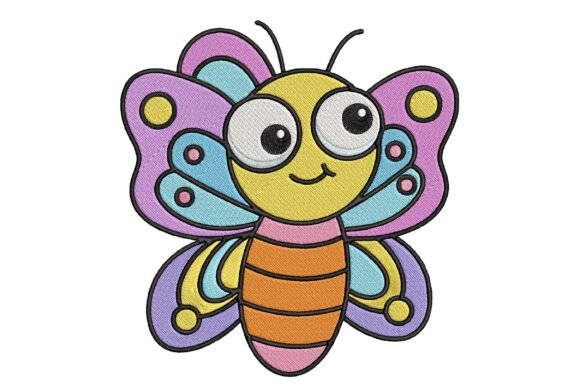
The moment I loaded Cartoon Butterfly Embroidery Design into my software and previewed it at actual size, I smiled—not because it’s “cute,” but because it *lands*. It’s got rhythm: wings that curve with intention, eyes that read as friendly rather than cartoonish-cloying, and a body shape that balances simplicity with personality. This isn’t just a bug motif—it’s a mood booster in stitch form. As someone who regularly selects embroidery files for client work and small-batch merchandise, I immediately pictured it stitched onto a soft cotton tote bag for a local children’s bookstore: cheerful without shouting, detailed without demanding perfection.
Where It Shines—Real Projects, Real Customers
I tested Cartoon Butterfly Embroidery Design across several real-world applications—and it held up where many playful designs falter. On a midweight organic cotton sweatshirt? Crisp satin-stitched wing edges stayed clean, and the fill stitches distributed evenly without puckering. On a linen tea towel? The design’s open negative space let the fabric breathe, avoiding that heavy, quilted look that can overwhelm kitchen textiles. For baby embroidery—think onesies or burp cloths—the scale feels just right: large enough to read at a glance, small enough to avoid bulk near delicate seams.
As an Etsy seller myself, I also ran a quick mockup series: Cartoon Butterfly Embroidery Design on a patch blank (for iron-on or sew-on use), on a curved cap front, and as part of a trio of bugs on a nursery pillow cover. In every case, the design retained its charm and legibility. Its bold outlines and generous spacing between elements make it forgiving on curved surfaces and stable on lightweight stabilizer. That’s rare in Bugs category designs—many sacrifice clarity for whimsy, but this one keeps both.
Where to Pause—and Why
That said, not every surface is ideal. On highly textured fabrics like bouclé or thick terry cloth, some of the finer wing details—especially the subtle inner lines suggesting veining—can blur. I’d recommend simplifying or omitting those lines if stitching on plush baby blankets or fuzzy hoodies. Similarly, on stretchy knits (think toddler leggings or ribbed tees), extra cutaway stabilizer is non-negotiable—this isn’t a running-stitch sketch; it relies on controlled satin and fill areas that need firm support.
Dark fabric demands attention too. The bright color palette implied in the product description suggests high-contrast thread choices—but if you’re stitching on navy or charcoal, test your chosen thread colors against the fabric *before* hooping. What reads as “vibrant” on screen may mute quickly in dense fill stitch. And while the design avoids tiny lettering or micro-details, the antennae tips and eye highlights are small enough to vanish on low-res printers or poorly digitized versions—so always inspect the actual embroidery file’s smallest elements before committing to a production run.
What It Adds to Your Finished Product—Beyond Pretty
This is where Cartoon Butterfly Embroidery Design quietly elevates your work. It doesn’t scream “handmade”—it *feels* handmade: intentional, warm, and thoughtfully scaled. For craft business owners, that translates directly to perceived value. A customer buying a personalized gift—a birthday sweatshirt, a holiday tea towel set, a boutique baby blanket—doesn’t just see a butterfly. They see care, playfulness, and visual cohesion. That builds trust faster than any tagline.
For digital product sellers, it’s a versatile asset. Use it standalone in a printable mockup pack for Etsy listings, layer it into seasonal bundles (“Spring Garden Embroidery Collection”), or pair it with coordinating floral or cloud motifs for cohesive design assets. Just remember: if you’re reselling the digital embroidery file itself—or including it in a commercial embroidery kit—verify licensing terms first. The product description mentions it’s “perfect for kids’” projects, but doesn’t clarify commercial reuse rights. Always confirm before listing.
Practical Designer Notes—Before You Stitch
Here’s what I do every time I evaluate a new machine embroidery design—and what I’d advise you to do with Cartoon Butterfly Embroidery Design:
- Test on scrap fabric first—especially if using it on a new substrate like bamboo jersey or recycled polyester.
- Check thread color contrast by stitching a single wing in your intended palette on both light and dark fabric swatches.
- Review stitch density: Is the fill stitch tight enough for durability but open enough to avoid stiffness? This design leans balanced—but verify in your software.
- Confirm hoop size compatibility. Does it fit comfortably in your most-used hoop without trimming corners or re-hooping?
- Inspect small details at 200% zoom: antennae, eye highlights, wing edge transitions. Are they digitized cleanly—or will they fray or skip?
- Test black-and-white mockups to assess silhouette strength. This design holds up well, but not all do.
- Use proper stabilizer: medium-weight cutaway for knits, tear-away for stable wovens, and optional topping for napped fabrics.
- Confirm dual-use suitability: Will it work equally well for personal gifts *and* small-shop merchandise? Yes—its tone is inclusive, not overly juvenile.
Final Thought: A Reliable Spark of Joy
Cartoon Butterfly Embroidery Design won’t replace your go-to florals or monograms—but it fills a quiet, valuable gap: joyful, scalable, and technically sound embroidery for everyday handmade products. It’s the kind of design that makes customers pause at a craft fair booth, smile, and say, “I need that on something.” Whether you’re stitching custom apparel, building digital embroidery collections, or launching a line of nursery goods, this is a thoughtful, functional, and genuinely likable addition to your embroidery project toolkit.