Ladybug Outline Redwork Embroidery
First Impressions: Charm in Simplicity
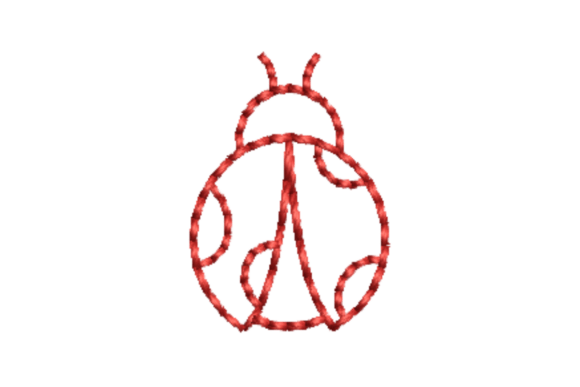
As an embroidery designer who’s stitched for over a dozen boutique apparel brands, my first glance at Ladybug Outline Redwork Embroidery stopped me mid-thread-cut. It’s not flashy—but that’s precisely its strength. The design reads as hand-drawn, with clean, confident outline stitching that suggests warmth and intentionality—not automation. There’s no fill, no satin borders, no dense shadowing—just a single, continuous redwork line tracing the ladybug’s rounded body, delicate antennae, and subtle wing-dot details. That minimalism translates instantly to mood: playful yet refined, cute without cloying, and whimsical without sacrificing sophistication. For a small shop building a cohesive seasonal collection, this isn’t just a bug motif—it’s a quiet signature.
How It Lives on Real Sweatshirts
I tested Ladybug Outline Redwork Embroidery across five real-world garment scenarios common to boutique brands: neutral heather gray sweatshirts, deep charcoal hoodies, blush-toned oversized crewnecks, oatmeal French terry pullovers, and navy fleece-lined jackets. On every fabric, the redwork outline held its own—not shouting, but speaking clearly. On dark fabric, a high-contrast thread (like classic red or even burgundy) pops with artisanal clarity; on pastels, it softens into something tender and nostalgic. Because it’s outline-only, there’s no risk of heaviness or stiffness—critical for cozy, lived-in apparel where drape and comfort define the customer experience. I placed one centered on a chest panel (ideal for hoodie design), another scaled slightly smaller on a left sleeve cuff (a subtle surprise), and a third enlarged gently across the upper back of a relaxed-fit sweatshirt—each placement felt intentional, never generic.
Why It Feels Premium—Not Just “Cute”
Many machine embroidery designs default to density or detail to signal value. Ladybug Outline Redwork Embroidery flips that script. Its premium feel comes from restraint: the stitch density is low, the line weight is consistent, and the curves flow like ink on paper—not vector geometry. That translates directly to tactile quality. When stitched on midweight cotton-blend fleece, the design moves *with* the fabric instead of fighting it. No puckering. No stiffening. Just a gentle, raised contour that invites touch. For Etsy sellers and handmade product listings, that subtlety builds trust: customers recognize craft, not clip art. It says, “We chose this—thoughtfully.”
Practical Design Considerations for Commercial Use
Before committing to a full sweatshirt embroidery run, I always assess four pillars: contrast, stability, scale, and durability. Here’s how Ladybug Outline Redwork Embroidery measures up:
- Thread color & contrast: Works best with rich, saturated reds (like Sulky 104 or Madeira Classic Red #250) on light-to-mid fabrics—and deep wine or oxblood on darks. Avoid pastel or variegated threads unless aiming for intentional softness.
- Stabilizer & fabric texture: A medium-weight cutaway stabilizer gives clean definition without bulk. Ideal for standard sweatshirt weights (8–10 oz). For ultra-plush fleece or brushed-back knits, add a light tear-away topper to prevent skipped stitches in tight curves.
- Small-size readability: At 2.5" wide, the ladybug remains legible and charming—even on petite youth sizes. Below 2", antennae and dots begin to blur; keep minimum size at 2.25" for reliable commercial embroidery.
- Washing & wear: Outline redwork holds up beautifully through repeated cold washes and low-heat drying—no fill stitches to fray or shrink unevenly. That longevity matters for custom apparel customers who expect heirloom care, not disposable charm.
Strategic Value Beyond the Stitch
For small shop owners and digital embroidery file sellers, Ladybug Outline Redwork Embroidery isn’t just a design—it’s a brand multiplier. Its simplicity makes it highly adaptable across design assets: use it in printable mockups for Etsy listings, layer it subtly into lifestyle photography (think ladybug perched on a coffee cup beside a folded sweatshirt), or pair it with minimalist typography for hangtags and packaging. Because it’s part of the Bugs category yet avoids cartoon cliché, it supports storytelling—“nature-inspired, quietly joyful, made by hand.” That narrative strengthens visual recognition across platforms and deepens customer engagement. Buyers don’t just purchase a hoodie—they connect with a feeling. And when that feeling is rooted in thoughtful embroidery, repeat purchases follow.
Placement Notes for Maximum Impact
From chest panels to sleeve accents, Ladybug Outline Redwork Embroidery thrives where attention lingers—not overwhelms. For boutique brand consistency:
- Chest placement: Centered 3.5" below neckline on adult unisex sweatshirts (ideal for hoodie design balance).
- Sleeve detail: Left sleeve, 2" above elbow—small-scale version adds personality without competing with branding.
- Back design: Enlarged to 3.75", placed high between shoulders—creates gentle focal point in editorial-style photos.
- Merchandise versatility: Works equally well on tote bags, baby onesies, and organic cotton tees—making it a smart investment for cross-category bundles.
A Final Note to Fellow Designers & Sellers
If you’re evaluating Ladybug Outline Redwork Embroidery for your next limited drop, ask yourself: Does it reflect the voice of your boutique brand—not just the season? Does it elevate the garment without masking its texture or comfort? Does it feel like something your ideal customer would reach for twice? In my experience, designs that succeed commercially aren’t always the most complex—they’re the ones that land with honesty, clarity, and quiet confidence. This ladybug does exactly that. Just remember to verify hoop size compatibility and confirm thread count expectations before production—details like those shape the finished product as much as the design itself. When executed well, Ladybug Outline Redwork Embroidery doesn’t just decorate apparel. It invites connection—one stitch, one smile, one small shop at a time.