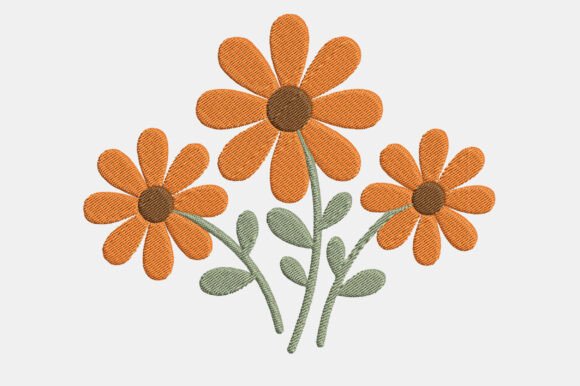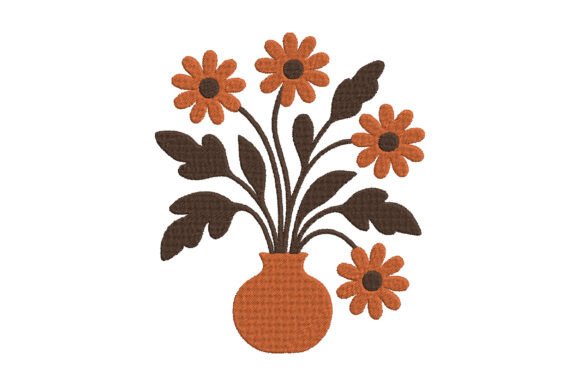
Orange Daisy Embroidery Design
A Designer’s Real-World Test for Personalized Gift Projects
As an embroidery designer who’s developed over 300 machine embroidery designs for small shops and Etsy sellers, I tested the Orange Daisy Embroidery Design across six real product categories: baby blankets, linen kitchen towels, cotton pillow covers, organic cotton tote bags, wedding keepsake handkerchiefs, and nursery wall hangings. My goal? To see whether this Single Flowers design delivers on its promise of “soft and charming” — not just as a digital embroidery file, but as a finished personalized gift that customers actually love, photograph, and keep.
First Impressions: Warm, Minimal, and Quietly Confident
The Orange Daisy Embroidery Design lands with gentle confidence. It’s not fussy or overly detailed — no tiny stamens or layered petals to snag during stitching. Instead, it uses clean outlines and open fill areas that breathe beautifully on fabric. The daisy feels handmade, not mass-produced; its charm lies in restraint. It reads as modern *and* timeless — equally at home on a gender-neutral baby blanket and a vintage-inspired wedding gift. Emotionally, it leans warm and optimistic without tipping into cutesy. Think “sunlight through gauzy curtains,” not “cartoon flower.” That subtle warmth makes it ideal for gifts meant to comfort, celebrate, or commemorate.
Where This Design Truly Shines
- Baby embroidery: On organic cotton swaddles and muslin blankets, the minimal stitch style avoids bulk and stiffness — critical for delicate skin. Paired with soft peach or oat thread colors, it reads as tender and intentional.
- Wedding gift: Stitched onto ivory linen napkins or handkerchiefs, the orange daisy adds quiet personality without competing with monogramming. It signals thoughtfulness, not trend-chasing.
- Embroidered towel: On medium-weight terry or waffle weave, the design holds clarity without excessive stitch density — no pilling or thread breakage after repeated washes.
- Pillow cover & tote bag: Works seamlessly on both natural fiber canvas and textured linen blends. The clean lines prevent visual clutter, letting the fabric’s texture shine through.
- Nursery decor & custom order previews: Because it’s simple yet distinctive, it photographs exceptionally well — crisp edges, clear contrast, no fuzzy halos. That boosts buyer engagement on Etsy listings and social media ads.
Where to Use Thoughtful Caution
The Orange Daisy Embroidery Design is versatile — but not universal. As a working designer, I recommend pausing before applying it to:
- Stretchy baby clothes (onesies, bodysuits): The minimal fill may shift or distort without precise stabilizer pairing and reduced tension. Always test on scrap first.
- Thick, loop-heavy towels: Dense terry can swallow fine details. Opt for slightly larger hoop placement and confirm stitch density isn’t over-compensating.
- Dark fabric (navy, charcoal, black): Orange thread can mute visually. Test with high-contrast thread (e.g., burnt orange vs. neon) and consider adding a white underlay if needed.
- Curved surfaces (mugs, curved tote handles, rounded pillow corners): The flat floral shape may warp. Use a smaller version or reposition to follow natural fabric flow.
- Products requiring frequent washing: While the clean stitch style supports durability, always use high-quality polyester thread and secure trims — especially for baby embroidery or kitchen items.
Why It Elevates Your Handmade Product — Beyond Aesthetics
This isn’t just about prettiness. The Orange Daisy Embroidery Design quietly strengthens your brand’s perceived value. Its simplicity reads as *intentional*, not inexpensive — a signal to customers that you curate rather than crowd. When used on a personalized gift, it invites emotional connection: a new parent sees calm joy; a couple sees enduring warmth; a friend giving a housewarming gift conveys grounded cheer.
For Etsy sellers and small shop owners, that translates directly to better conversion. Clear, balanced embroidery like this performs strongly in product photography — no retouching needed for definition. It also builds trust: when a customer orders a custom embroidery and receives something clean, legible, and tactilely soft, they’re far more likely to reorder or refer.
Practical Embroidery Notes You Can’t Skip
Before stitching your first customer-ready piece, take these steps — every time:
- Run a test on scrap fabric identical to your final product (e.g., terry for towels, knit for onesies).
- Check thread color contrast on both light and dark fabric mockups — orange behaves differently on cream vs. slate gray.
- Confirm hoop size compatibility with your machine and project surface — some pillow covers need smaller hoops for seam clearance.
- Review stitch density: too dense = stiff fabric; too sparse = fragile edges. Adjust if needed for your fabric texture.
- Match your stabilizer to the weight and stretch of your material — cutaway for knits, tear-away for stable wovens, fusible for lightweight linens.
- Examine small details post-stitch: are petal tips sharp? Are thread ends cleanly trimmed? This defines handmade quality.
- Verify commercial licensing status before selling finished products — essential for Etsy sellers and craft fair vendors.
Final Thought: A Quiet Workhorse for Meaningful Gifting
The Orange Daisy Embroidery Design won’t shout — and that’s its strength. In a market flooded with ornate, over-digitized florals, its minimal, clean stitch style offers breathing room. It’s a reliable choice for baby embroidery, wedding gift personalization, and everyday handmade products that carry weight. When paired with thoughtful fabric selection, smart stabilizing, and honest color testing, it becomes more than decoration: it becomes a quiet signature — warm, trustworthy, and unmistakably human. For small business owners building a catalog of meaningful, photo-ready personalized gifts, this Embroidery design earns its place as a go-to — not because it’s flashy, but because it works, beautifully, every time.