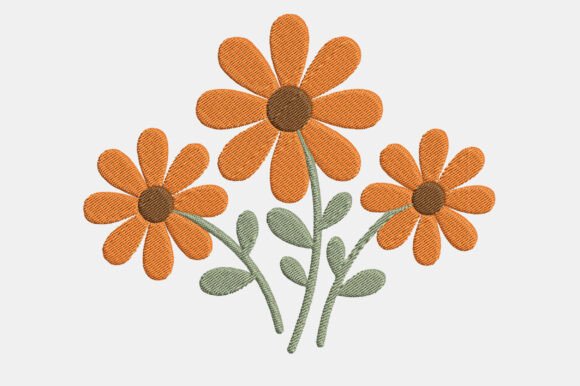
Pink Daisy Flower Embroidery Design
A Soft, Elegant Botanical That Builds Brand Warmth
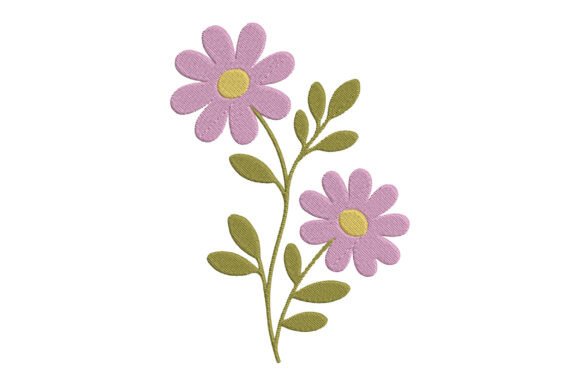
As an embroidery designer who’s developed hundreds of commercial designs for small businesses—from neighborhood bakeries to indie florists—I immediately recognized the quiet strength in the Pink Daisy Flower Embroidery Design. Its description—“a soft and elegant touch… two delicate flowers with leaves… fresh and natural botanical feel”—isn’t just poetic fluff. It’s an accurate first impression: this is a friendly yet refined machine embroidery design that leans into approachability without sacrificing professionalism. It doesn’t shout; it invites. That makes it unusually versatile for branded merchandise where tone matters as much as visibility.
Where This Design Earns Its Keep in Real Business Use
The Pink Daisy Flower Embroidery Design shines brightest when used intentionally—not as filler, but as a signature accent. For a café or boutique, it works beautifully as a chest patch on staff aprons or woven tote bags, reinforcing a gentle, handmade product ethos. On caps, it reads cleanly at 2.5” wide—ideal for front-panel placement without overwhelming the shape. As a sleeve detail on custom apparel or a subtle corner motif on packaging tags, it adds tactile sophistication without demanding attention.
Small business merch thrives on consistency and emotional resonance—and this design delivers both. A pet brand using it on embroidered bandanas or treat pouches gains instant warmth and care. A florist or creative studio can pair it with minimalist typography in a printable mockup to preview branded stationery or gift wrap. Because it belongs to the Single Flowers category, it avoids visual competition with complex logos—making it perfect as a secondary design asset alongside primary branding.
Use With Care: Practical Limits for Commercial Embroidery
While elegant, the Pink Daisy Flower Embroidery Design isn’t universally scalable. Its delicate leaves and fine petal outlines begin to lose definition below 1.75”. So avoid shrinking it for tiny cap back logos or micro-patches on keychains unless you’ve confirmed stitch clarity in test runs. Curved surfaces—like baseball caps or contoured tote handles—require extra stabilizer and careful hooping to prevent distortion of those graceful lines.
On dark uniforms or textured fabric (think canvas totes or linen aprons), thread color contrast becomes critical. Pink thread alone may fade visually—pair it with a light cream or soft sage outline to lift the motif. Also note: its “natural botanical” aesthetic means higher stitch density in petal centers. That’s lovely for premium finished product quality—but demands proper cutaway stabilizer on lightweight fabrics to avoid puckering. Always test on your actual production fabric before committing to bulk runs.
How It Shapes Brand Identity and Customer Trust
In a crowded marketplace, consistency builds recognition—and subtlety builds trust. The Pink Daisy Flower Embroidery Design supports both. Unlike loud, trend-driven motifs, it feels timeless and intentional. When repeated across aprons, tote bags, and customer thank-you cards, it quietly signals craftsmanship and care—key drivers for Etsy sellers and local handmade brands. Customers don’t just see a flower; they register calm, authenticity, and attention to detail.
That perception directly lifts perceived product value. A $28 tote bag with this embroidered detail feels more considered—and more worth gifting—than one with generic clip art. And because it’s rooted in nature rather than novelty, it ages gracefully across seasons and campaigns. No rebranding panic needed when spring ends.
Embroidery Designer Notes You Can’t Skip
Before sending the Pink Daisy Flower Embroidery Design to production, here’s what I always do—and recommend you do too:
- Test in black and white first. Confirm legibility and balance without color bias—especially important for client approvals.
- Check small patch viability. Resize to your smallest intended use (e.g., 1.5” embroidered patch) and zoom in: are leaf tips crisp? Do inner petals hold separation?
- Review thread color contrast against your base fabric—not just on screen. What looks soft on white cotton may disappear on heather grey.
- Inspect spacing and underlay. Tight petal-to-leaf gaps need clean underlay to prevent thread pull or shadowing on dark garments.
- Confirm hoop size compatibility. Does it fit comfortably in your most-used hoop without excessive re-hooping mid-stitch?
- Test on real fabric with real stabilizer. Digital embroidery file previews lie. Run a physical sample on your exact cap twill or tote canvas.
- Create a client-facing printable mockup showing the design scaled and placed on actual product photos—this prevents costly revisions later.
- Compare beside other design assets. Does it harmonize with your logo, fonts, and brand palette—or clash in weight or rhythm?
- Verify commercial licensing. Since this is for small business merch and not personal craft, ensure your digital embroidery file includes rights for resale, promotional use, and client projects.
Final Thought: Elegance Is a Strategic Choice
The Pink Daisy Flower Embroidery Design isn’t just another floral—it’s a brand amplifier. It meets the unspoken needs of small business owners: it’s easy to integrate, hard to misfire, and rich in quiet storytelling. Whether you’re embroidering patches for a yoga studio’s welcome kits or adding charm to a bakery’s takeout bags, this design says, “We made this with thought.” And in today’s market, that kind of intentionality isn’t decorative—it’s essential.